TSMC posts a record quarter as AI demand keeps Texas on the table
TSMC reported record results for the third quarter ended September 30, 2026, driven by demand for AI accelerators and leading-edge manufacturing. Consolidated revenue reached NT$1,494.24 billion, net income was NT$763.06 billion, and diluted earnings per share were NT$29.43. Revenue rose 50.9% year over year, while net income and diluted EPS both increased 68.7%. Revenue in U.S. dollars was $46.72 billion. Gross margin was 66.4%, operating margin was 58.7%, and net profit margin was 51.1%.
Advanced processes are taking a larger role. 2-nanometer production represented 8% of wafer revenue, 3-nanometer 33%, 5-nanometer 28%, and 7-nanometer 10%. Processes at 7 nanometers and below accounted for 79% of wafer revenue under TSMC’s definition of advanced technologies. As AI data centers demand more compute and power, capacity, packaging, and customer planning become increasingly important.
TSMC management said it is reviewing options beyond Arizona to respond to requests from major U.S. customers for more capacity. Teams have been sent to Texas to evaluate possibilities, but the plan remains under discussion. The company also said it is open to potential cooperation with Elon Musk’s planned Terafab project. No binding Texas investment decision or factory schedule has been announced, and talks with Terafab do not amount to a completed partnership.
That distinction keeps a record-profit report from being mistaken for a construction announcement. The pressure to expand capacity is real, but new fabs require major capital, skilled labor, energy, and supplier coordination. Strong quarterly margins do not remove the cost and operational complexity of building more U.S. capacity. For consumers, the effect is indirect: the availability, delivery times, and cost of AI hardware will depend on how these capacity decisions develop.
The financial result is a signal that the AI investment cycle remains strong, but it cannot guarantee the sector’s future. TSMC’s utilization depends on customer plans, energy, equipment, and packaging access. If Texas advances, U.S. manufacturing could diversify, but the timing and process technology of any new facility would still be unknown. The near-term consequence is therefore a review of supply plans, not an immediate change in product prices.
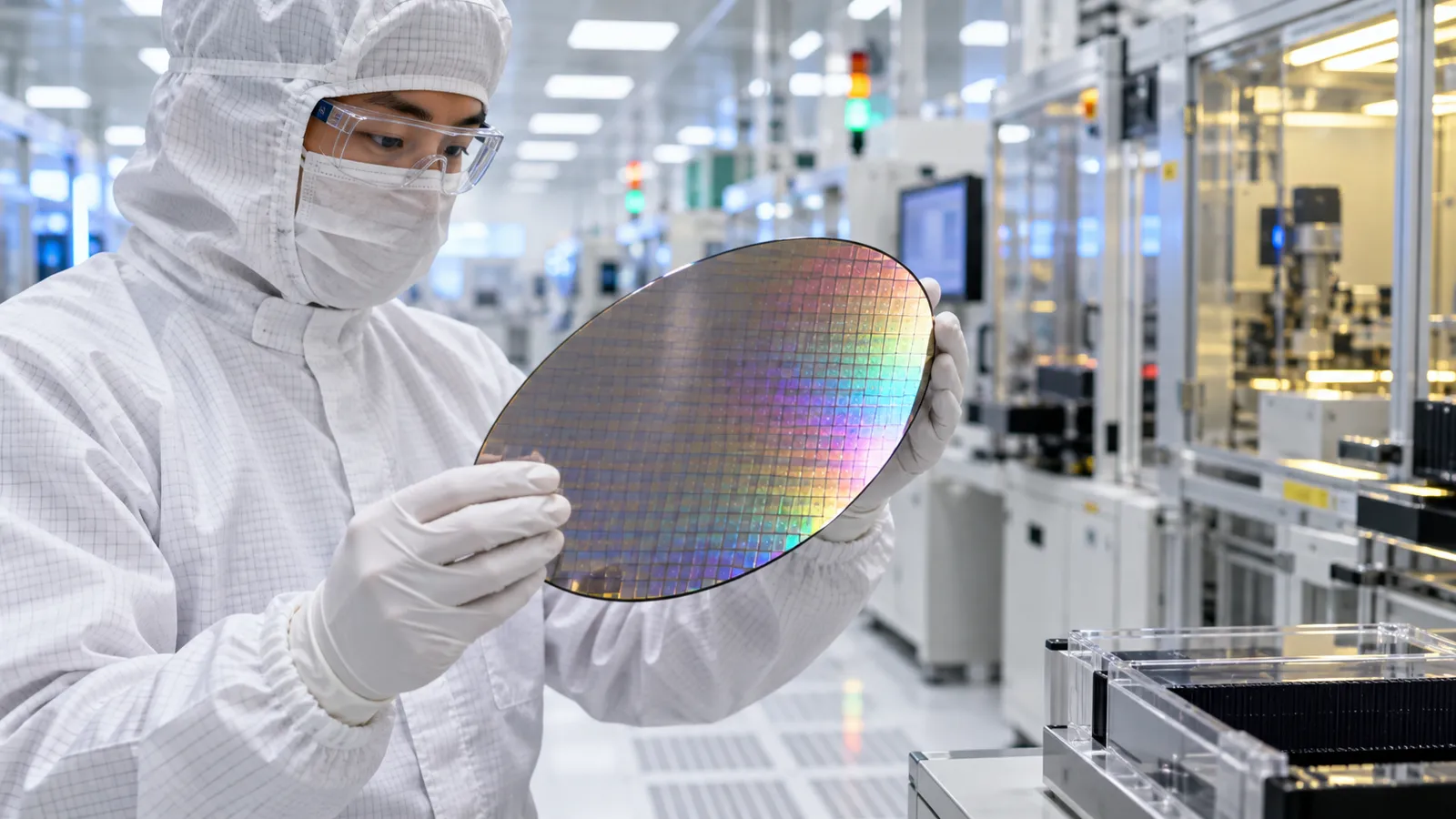
The cover is an AI-generated illustrative scene, not an authenticated product or event photograph.