China proposes new export rules for AI and other critical technologies
China’s Ministry of Commerce and Ministry of Science and Technology began seeking public comments on October 16 for revisions to the technology export catalog. The proposal covers 40 critical technologies in artificial intelligence, biomedicine, and solar power. It would place 14 technologies in a prohibited category and 26 in a restricted category. The text is still a proposal rather than final regulation, and its scope could change after consultation.
The AI section includes 23 technologies related to large models, intelligent agents, computing clusters, and information processing. Techniques for generating and mutating malicious code are listed among proposed prohibitions, while AI-assisted vulnerability discovery could face restrictions. The ministries say the goal is to reduce security and misuse risks, while the proposal describes automatic licensing for some open-source or already public technologies.
The proposal focuses on cross-border transfer rather than simply selling a model. Overseas localization, a technical license, or a change in ownership to a foreign entity could fall within registration. The current explanation says API access, web applications, SaaS services, and lightweight edge deployments may not count as exporting the underlying technology in some cases. Companies should review the final text and licensing requirements before applying that distinction.
The biomedical section covers five technologies involving cell and gene therapies, pathogens, and small nucleic-acid medicines. The solar section adds 12 technologies related to polysilicon, silicon wafers, and cell production. Temporary pre-export registration will apply until a revised catalog formally takes effect. That could affect joint research, licensing, equipment supply, and global production networks. For now, this is a proposal capable of reshaping technology flows, not an immediate supply cutoff.
Technical definitions will determine the practical effect of an export rule. Licensing a model, transferring weights, moving training data, or installing a production line abroad may create different legal outcomes. Multinational teams should review contracts and access rights. The proposed facilitation for open-source work does not mean every open-source project is automatically exempt; thresholds and registration duties will depend on the final text.
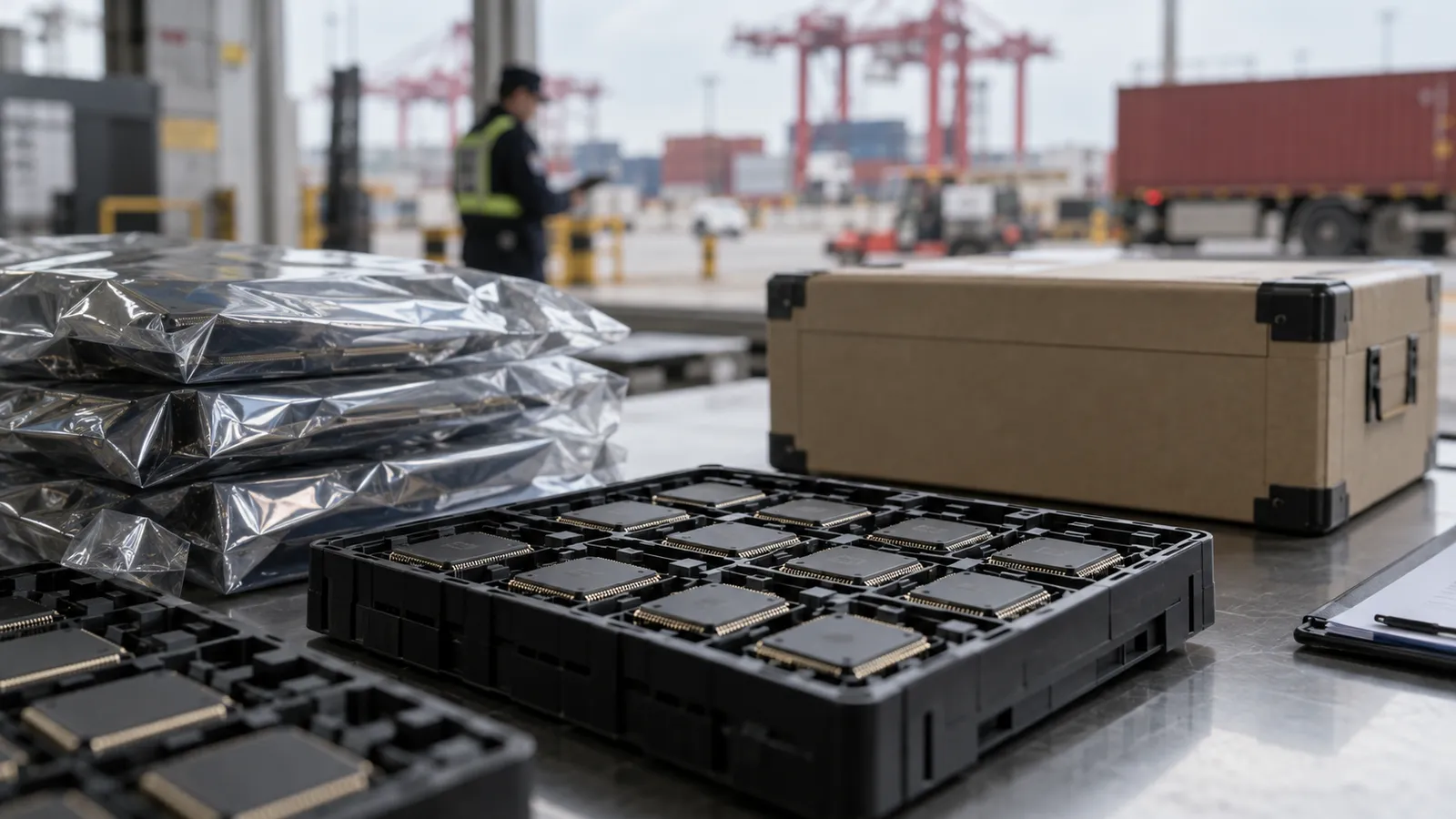
The cover is an AI-generated illustrative scene, not an authenticated product or event photograph.