Apple’s October 13 gathering: what I want from a HomePod-centered smart home
Apple’s “Welcome home” gathering announced for October 13, 2026 suggests a renewed focus on the smart home. An updated HomePod mini, a new Apple TV 4K, and a home hub with a display are among the expectations. The products and their features should not be treated as settled before the announcements take place.
What interests me about this development is how clearly and reliably devices will work together at home. A new speaker or display can generate excitement; its everyday value becomes apparent after a few weeks of use.
HomePod’s place in the home
HomePod already plays a role beyond music. It can act as a home hub with compatible HomeKit and Matter accessories, helping people control devices such as lights, thermostats, and blinds by voice or through the Home app. The available commands and automations depend on the accessories installed in the home.
That is why I would assess a potential HomePod update on more than sound quality. Applying a command in the right room, being easy for different household members to use, and making it clear when an accessory does not respond are also important parts of the experience.
What more natural conversation should mean in practice
I want a home assistant to reduce the need to memorize commands. Matching a request such as “dim the living room light a little” to the right device would be a good start. If there are multiple rooms or similarly named devices, recognizing ambiguity and asking a brief question would be just as valuable.
These are my expectations for a good home assistant, rather than confirmed features of the upcoming products. Particularly for locks, alarms, or heating, I would want to see what the system understood and what it actually did. A fluent response alone does not prove that an action was completed successfully.
What should a home display make easier?
If a home hub with a display arrives, showing the state of the home at a glance could be a meaningful use case. Which lights are on, which room is warm, and which automation is active? A display like that could provide a shared control point for someone who does not want to pick up their phone.
In my view, the design would succeed by making frequent tasks easy to reach rather than gathering every setting in one place. An interface that guests and family members can understand would have more everyday value than a system only the technically inclined person in the household can use.
The details I will look for on October 13
The decisive questions for me will be compatibility with existing accessories, support coming to older devices, language and region options, behavior when connectivity is lost, and how household data is handled. Pricing and availability will also help establish who the products are for.
The everyday value of Apple’s smart home push depends on these details coming together. What makes HomePod a natural part of the home is the ability of everyone in the household to use it easily and with confidence.
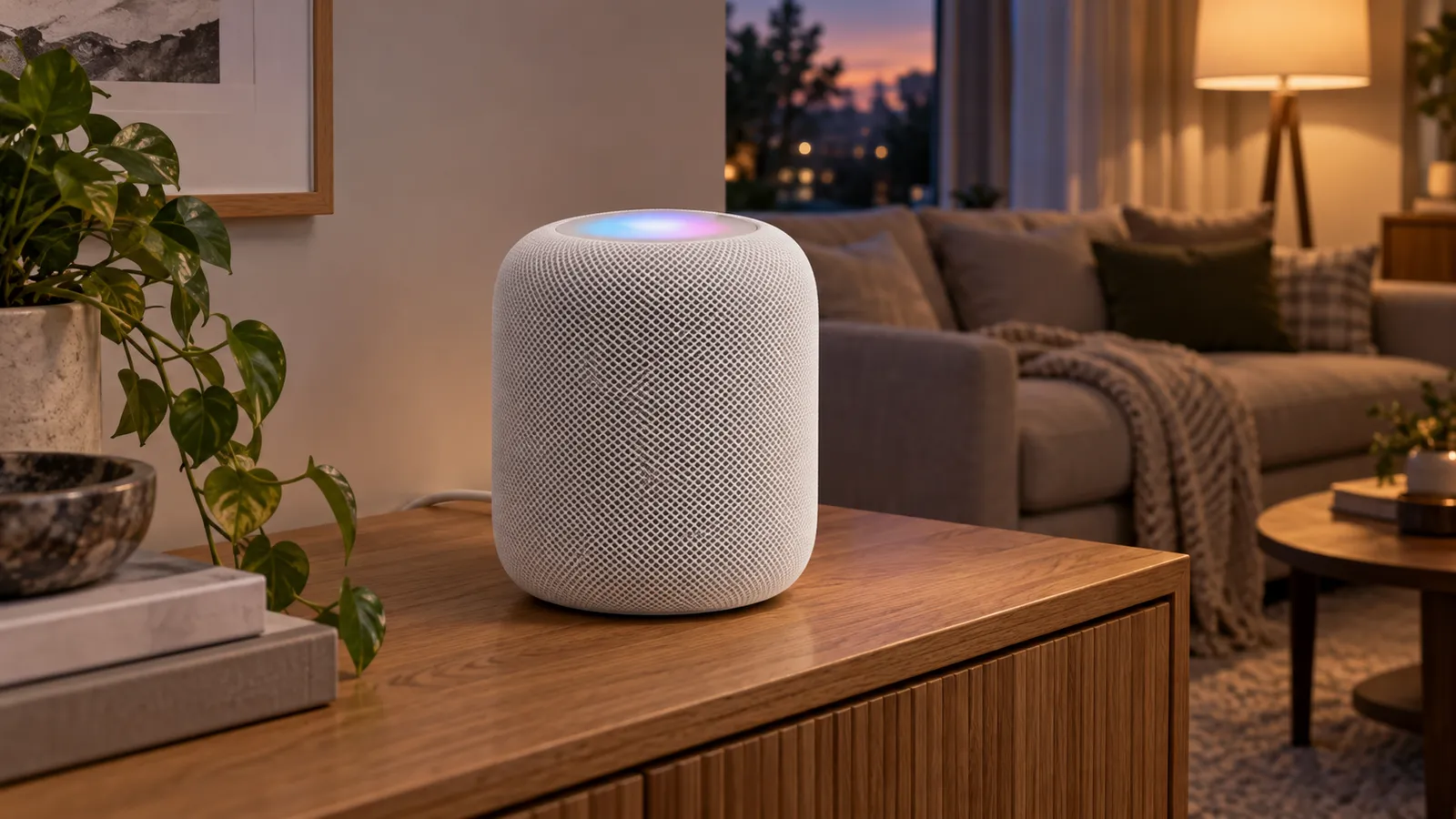
The cover is an AI-generated illustration based on the existing HomePod design. It does not depict the design of devices that have yet to be announced.